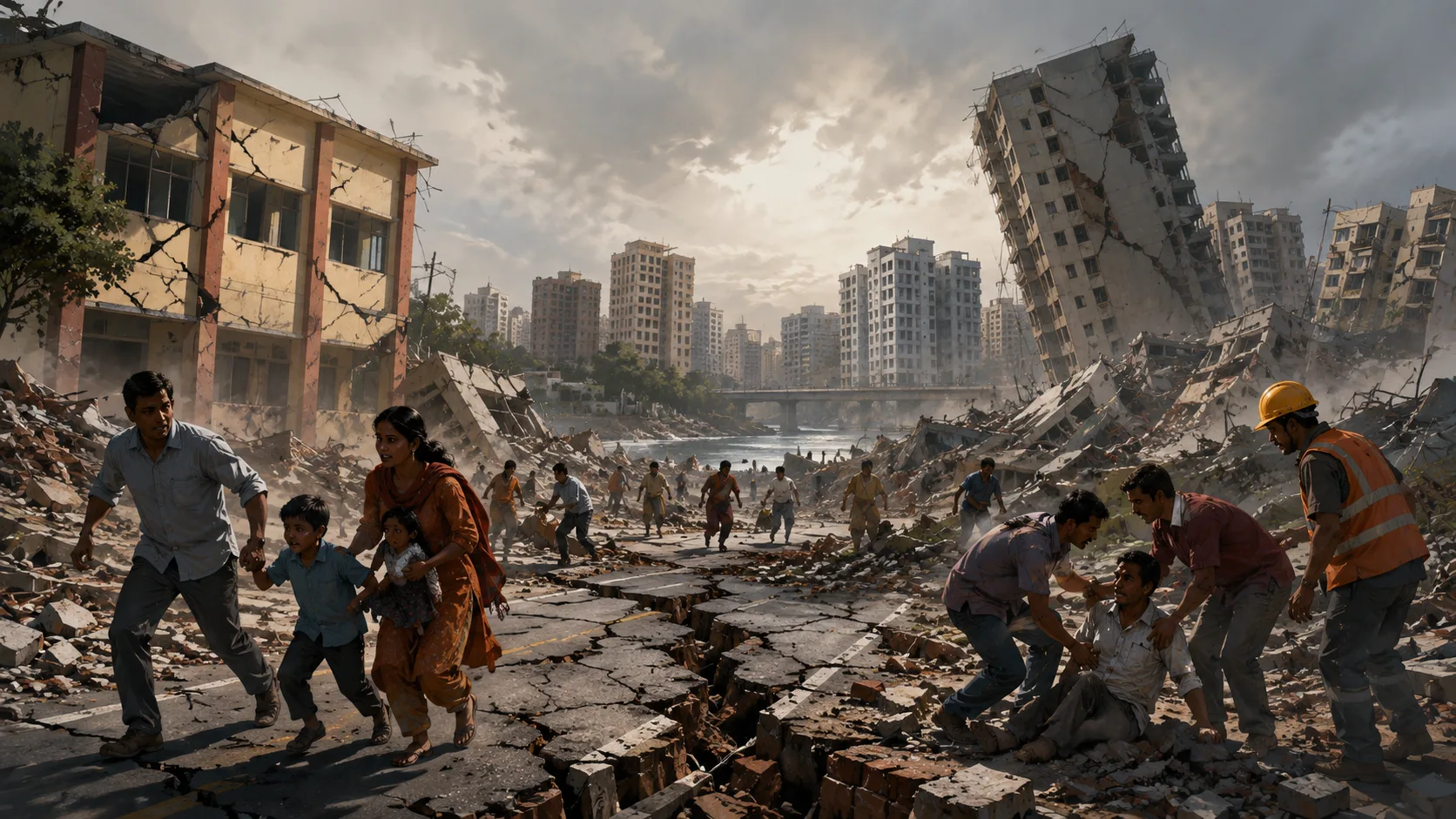
When the Earth Shakes: Are Bangla desh's Homes and Schools Ready?
Mohammad Harun-Or-Rashid
Senior Teacher, Geography and Environment, BEPZA Public School & College, Chattogram EPZ.
Bangladesh lies in one of South Asia's most active seismic regions, yet earthquake preparedness remains limited in many homes and schools. This article explains the country's risk, outlines practical safety measures, and highlights how preparedness can save lives before, during, and after an earthquake.
1. A Disaster That Gives No Warning
It takes only a few seconds for an earthquake to change lives forever.
Buildings collapse without warning. Families are separated. Schools, hospitals, and entire neighborhoods can be reduced to rubble in moments. Around the world, devastating earthquakes have shown us just how quickly a normal day can turn into a national tragedy.
Perhaps you have watched heartbreaking scenes from Türkiye, Syria, or Nepal and wondered:
"What if a similar earthquake struck Bangladesh? Would we be ready?"
This is not a distant possibility. It is a question every one of us should be asking.
Among all natural hazards, earthquakes are among the most unpredictable and destructive. Unlike cyclones or floods, they cannot yet be forecast accurately enough to provide early warning. When the ground begins to shake, there is often no time to prepare. Within seconds, lives, homes, and livelihoods can be lost.
Small and large earthquakes occur somewhere in the world every day. While many cause little or no damage, a powerful earthquake can leave lasting scars on communities for generations. That is why earthquake preparedness is not simply a government responsibility—it is a shared responsibility for every family, every school, and every community.
What Is an Earthquake?
An earthquake is the sudden shaking of the Earth's surface caused by the release of energy beneath the Earth's crust. As tectonic plates move, stress gradually builds along faults. When that stress becomes too great, the rocks suddenly shift, releasing energy that travels through the ground as seismic waves.
Some earthquakes are so mild that people barely notice them. Others are powerful enough to destroy buildings, crack roads, disrupt essential services, and place thousands of lives in danger within moments.
Even after the main earthquake ends, the danger may not be over. Smaller earthquakes, known as aftershocks, often follow. Although usually less powerful than the main shock, they can still bring down weakened buildings and create new hazards for survivors and rescue workers.
Is Bangladesh at Risk?
Many people assume that Bangladesh is relatively safe from major earthquakes. Unfortunately, the evidence suggests otherwise.
Bangladesh lies in one of South Asia's most active seismic regions. Several active fault lines surround the country, and history reminds us that powerful earthquakes have struck this region before.
Researchers have identified at least five significant fault systems near Bangladesh. Historical records show that an earthquake of around magnitude 8 struck the Chattogram–Arakan region in 1762, while another devastating earthquake in 1897 caused widespread destruction across much of the region.
Perhaps the greatest challenge is that no one can accurately predict when the next major earthquake will occur. It could happen decades from now—or tomorrow.
That uncertainty makes one thing absolutely clear: preparedness is our strongest defense.
Are We Truly Ready?
This leads to an important question.
If a major earthquake were to strike Bangladesh today, how prepared would we really be?
Although the country's disaster management capacity has improved over the years, earthquake preparedness still requires much greater attention. Regular earthquake drills remain uncommon in many homes, schools, offices, and public institutions.
Yet experience from around the world tells us a simple truth: people who prepare before a disaster are far more likely to respond calmly, make better decisions, and protect themselves and those around them.
In the end, earthquake preparedness does not begin when the ground starts shaking.
It begins long before that—with awareness, planning, practice, and the determination to protect the people we care about most.
2. How Prepared Is Bangladesh?
Understanding the risk is only the first step.
The more important question is this:
If a major earthquake struck Bangladesh today, how prepared would we really be?
The answer is encouraging in some ways—but concerning in many others.
Over the past two decades, Bangladesh has made remarkable progress in disaster management. Emergency response systems have become more organized, the Fire Service and Civil Defence have strengthened their search-and-rescue capabilities, and disaster preparedness has received far greater national attention than ever before.
The tragic collapse of Rana Plaza in 2013 was a painful reminder of the importance of emergency preparedness. It also led to valuable investments in rescue training, emergency coordination, and response capacity. These improvements have undoubtedly made Bangladesh better prepared than it was in the past.
But preparedness is about far more than rescue equipment and professional responders.
Imagine a powerful earthquake striking Dhaka or another densely populated city during a busy weekday.
Within seconds, roads cold become blocked, electricity and communications disrupted, hospitals overwhelmed, and thousands of people in need of immediate assistance.
No emergency service—no matter how well trained or well equipped—can reach everyone at once.
During those first critical minutes, survival often depends not on professional rescuers, but on the people already there.
Parents.
Teachers.
Neighbors.
Friends.
Ordinary citizens become the first responders.
That is why earthquake preparedness cannot be left to government agencies alone.
It must begin long before an emergency happens, and it must involve every household, every school, every workplace, and every community.
Unfortunately, this is where Bangladesh still has important work to do.
Regular earthquake drills remain uncommon in many schools and offices. Many families have never discussed what they would do if an earthquake occurred. Few people know the safest places inside their homes, how to evacuate safely, or what should happen in the minutes after the shaking stops.
These are not small gaps in awareness.
During a major earthquake, they can become the difference between confusion and confidence, between injury and survival.
Preparedness Begins Before the Ground Shakes
One of the most common misconceptions is that disaster management begins after an earthquake occurs.
In reality, the most effective response starts long before the first tremor is ever felt.
Preparedness begins with simple actions.
A family discussing an emergency plan.
A teacher leading an earthquake drill.
A school identifying safe evacuation routes.
A workplace practising emergency procedures.
Individually, these actions may seem small.
Together, they build a culture of preparedness that saves lives.
Around the world, communities that prepare before disasters strike consistently experience fewer casualties, respond more effectively, and recover more quickly.
Bangladesh has already shown that it can become a global leader in disaster preparedness for cyclones and floods.
There is every reason to believe we can achieve the same level of preparedness for earthquakes.
The challenge before us is not a lack of ability.
It is a lack of readiness.
And readiness begins today—not when the ground starts to shake.
3. Preparing Your Home Before an Earthquake
When it comes to earthquakes, preparation is everything.
Unlike many other natural disasters, earthquakes give us no warning. There are no sirens, no countdowns, and often no second chances. Once the ground begins to shake, there is very little time to think or act.
That is why the safest response begins long before an earthquake ever happens.
Fortunately, preparing your home does not require expensive equipment or complicated plans. A few simple precautions taken today can significantly reduce risks and help protect your family when every second counts.
Choose a Safe Home
Earthquake preparedness starts with the place you live.
Whenever possible, choose a building that has been designed and constructed in accordance with approved building codes and safety standards. A structurally sound building is your first and most important line of defense during an earthquake.
It is equally important to know where the emergency exits and stairways are and to make sure they remain clear and accessible at all times.
Put Together an Emergency Kit
Every household should keep a basic emergency kit in an easily accessible location.
The kit should include essential items such as a flashlight, extra batteries, a battery-powered radio, a first-aid kit, necessary medicines, bottled drinking water, and non-perishable food.
These supplies may seem ordinary today, but after a major earthquake they could become invaluable—especially during the first few hours before outside assistance arrives.
Make Your Home Safer
Many earthquake injuries are caused not by collapsing buildings but by falling furniture and household objects.
Secure tall bookshelves, wardrobes, refrigerators, and cabinets firmly to the wall whenever possible. Store heavy or fragile items on lower shelves rather than overhead, where they are less likely to fall and cause injury.
A few minutes spent securing your home today could prevent serious accidents tomorrow.
Know How to Shut Off Utilities
Every adult in the household should know how to turn off the main gas, electricity, and water supplies if necessary.
After an earthquake, damaged utility lines can lead to fires, gas leaks, electrical hazards, and flooding. Knowing how to disconnect these services safely can prevent additional emergencies.
Identify Safe Places and Escape Routes
Take time to identify the safest locations inside your home before an emergency occurs.
A sturdy table, a strong interior wall, or a structural column may provide better protection during an earthquake. At the same time, choose a safe open area outside where every member of the family can gather after evacuating.
Having a meeting place in advance can reduce confusion and help families reunite quickly.
Create a Family Emergency Plan
Preparedness is not just about supplies—it is also about communication.
Keep important phone numbers readily available, including hospitals, the Fire Service, ambulance services, and close relatives. Discuss with your family what each person should do during an earthquake and where everyone should meet afterward if you become separated.
A simple plan can make decision-making much easier during a stressful situation.
Practice as a Family
The best emergency plan is the one everyone remembers.
Children, in particular, should be taught what to do during an earthquake in a calm and reassuring way. Families should also practice earthquake drills once or twice a year so that everyone becomes familiar with the correct actions.
When people have practiced beforehand, they are less likely to panic and more likely to respond with confidence.
Preparation is not about expecting disaster—it is about protecting the people we love.
The choices we make today can determine how safely our families face tomorrow's emergencies.
4. What Should You Do During an Earthquake?
The ground begins to shake.
The lights swing overhead. Windows rattle. Walls creak. Within seconds, fear takes over.
In moments like these, your first instinct may be to run. But that instinct can be dangerous.
During an earthquake, your greatest protection is not speed—it is staying calm and making the right decisions.
Stay Calm
Although a strong earthquake can feel much longer, most earthquakes last only a few seconds to about a minute.
Those brief moments can determine your safety. Instead of panicking, focus on protecting yourself and the people around you.
A calm mind makes better decisions.
Remember: Drop, Cover, and Hold On
If you are indoors, follow the internationally recommended "Drop, Cover, and Hold On" procedure immediately.
Drop to your hands and knees to avoid being knocked down.
Cover your head and neck by taking shelter under a sturdy desk or table.
Hold On until the shaking stops.
If no table or desk is available, move next to a strong interior wall or structural column. Protect your head and neck with your arms, and stay where you are until the shaking ends.
This simple action has saved countless lives around the world.
If You Are Inside a Multi-Story Building
One of the most common mistakes people make is trying to run outside while the building is shaking.
Avoid rushing toward the stairs or attempting to use an elevator. Both can become extremely dangerous during an earthquake.
Instead, remain where you are in a safe location until the shaking has completely stopped. Then evacuate calmly by using the stairs.
Never use an elevator during or immediately after an earthquake.
Stay Away from Windows and Heavy Objects
Glass windows, mirrors, hanging light fixtures, tall bookshelves, and heavy furniture can become serious hazards during strong shaking.
Move away from anything that could fall, shatter, or topple over.
Often, the greatest danger inside a building comes not from the building itself, but from unsecured objects.
If You Are Outdoors
If you are already outside, move quickly to an open area away from buildings, trees, utility poles, bridges, flyovers, and large signboards.
Stay there until the shaking has completely stopped.
Do not re-enter damaged buildings until they have been declared safe by the appropriate authorities.
If You Are Driving
If an earthquake occurs while you are driving, reduce your speed gradually and stop in a safe location.
Remain inside the vehicle until the shaking stops.
Avoid parking under bridges, flyovers, tunnels, power lines, or near buildings that could collapse.
If You Are in a Crowded Place
Shopping malls, schools, markets, stadiums, and other public places can quickly become chaotic during an earthquake.
Resist the urge to run with the crowd.
Follow the instructions of emergency personnel or building staff, and move to a safe area only when it is safe to do so.
Panic spreads faster than earthquakes—but calm leadership saves lives.
Above all, remember this:
Earthquakes cannot be controlled. Our response can.
Learning the correct safety procedures today may one day save your own life—or someone else's.
5. What Should You Do After an Earthquake?
When the shaking stops, it is natural to feel relieved.
But an earthquake does not always end when the ground becomes still.
Some of the greatest dangers can arise in the minutes and hours that follow. Damaged buildings may collapse without warning. Gas leaks can trigger fires. Broken power lines and weakened structures can create new hazards. In addition, aftershocks may strike at any time.
This is why your actions after an earthquake are just as important as your actions during one.
Move to a Safe Open Area
If you are inside a building, remain where you are until the shaking has completely stopped.
Then leave the building calmly by using the stairs.
Never use an elevator after an earthquake, as power failures or structural damage may cause it to become unsafe.
Once outside, move to a designated open area and stay well away from damaged buildings, walls, balconies, utility poles, and anything that could collapse during an aftershock.
Watch for Secondary Hazards
An earthquake often creates dangers that are not immediately visible.
Check your surroundings carefully for gas leaks, damaged electrical wiring, broken water pipes, or signs of structural damage.
If you smell gas, notice exposed electrical wires, or believe a building has become unsafe, leave the area immediately and notify the appropriate emergency authorities.
Protecting yourself from these secondary hazards is just as important as surviving the initial earthquake.
Help Others—Safely
In every disaster, the first people to offer help are often family members, neighbors, and ordinary citizens.
If someone nearby is injured, assist them only after making sure the area is safe. Provide basic first aid if you know how, and seek professional medical assistance as quickly as possible.
However, avoid entering unstable buildings or attempting dangerous rescues unless you have the necessary training and equipment.
Your safety should never become another emergency.
Stay Informed
After a major earthquake, confusion spreads quickly.
Unfortunately, so do rumors.
Rely only on information from trusted sources such as government agencies, emergency services, radio, television, or official emergency alerts.
Following accurate information helps you make better decisions and prevents unnecessary panic.
Support Your Community
Disasters remind us that no one faces an emergency alone.
Check on elderly neighbors, young children, people with disabilities, and anyone who may need additional assistance. Offer help where you can, and cooperate with emergency responders whenever possible.
Communities recover faster when people look after one another.
Stay Alert for Aftershocks
Even after the main earthquake has ended, smaller earthquakes may continue.
These aftershocks can occur minutes, hours, or even days later, and they may cause already damaged buildings to collapse.
Remain cautious, avoid unsafe structures, and be prepared to protect yourself again if the ground begins to shake.
The end of the first earthquake does not always mean the danger has passed.
Above all, remember this:
Surviving the earthquake is only the first step. Staying alert afterward is what keeps you safe.
Every calm decision you make after an earthquake can help protect not only your own life, but also the lives of those around you.
6. School Preparedness: Every School Must Be Ready
For children, school is much more than a place to study.
It is where they learn, make friends, build confidence, and shape their dreams for the future.
But if an earthquake strikes during school hours, those familiar classrooms can suddenly become places of uncertainty and fear.
That is why earthquake preparedness in schools is not simply a safety measure—it is a responsibility we owe to every child.
A truly safe school is not measured only by the strength of its buildings. It is measured by how well its teachers, students, and staff are prepared to respond when every second matters.
Before an Earthquake: Building a Culture of Preparedness
The safest schools are not the luckiest ones.
They are the schools that prepare.
Earthquake preparedness should become part of everyday school life rather than an activity carried out only after a major disaster makes the headlines.
Every school should conduct regular earthquake drills so that students know exactly what to do without hesitation. Safety awareness sessions can help children understand earthquakes in a calm and age-appropriate way, replacing fear with knowledge and confidence.
Classrooms should clearly identify safe and unsafe areas. Students should know where they can take shelter and which places to avoid, such as large glass windows, unsecured bookshelves, hanging light fixtures, and heavy cabinets.
Schools should also inspect buildings regularly, ensure that emergency exits remain unobstructed, display clear evacuation maps, and keep first-aid supplies ready for emergencies.
Preparedness is not created in a single day.
It grows through planning, practice, and repetition.
During an Earthquake: Leadership Makes the Difference
When an earthquake begins, students naturally look to their teachers for guidance.
That is why the teacher's response often determines the classroom's response.
Teachers should remain calm, speak clearly, and give simple instructions. Their confidence helps reduce fear and prevents panic from spreading among students.
Students should immediately follow the internationally recommended "Drop, Cover, and Hold On" procedure, protecting their head and neck beneath a sturdy desk or table until the shaking stops.
Running toward exits while the building is shaking can be extremely dangerous. A calm and orderly response is always safer than a hurried escape.
In those critical moments, teachers are doing far more than teaching.
They are protecting lives.
After an Earthquake: Every Child Counts
Once the shaking has stopped, teachers should guide students carefully to the designated assembly area using the stairs.
Elevators should never be used during an evacuation.
After reaching the assembly point, every class should be accounted for immediately to ensure that no student is missing or left behind.
Students who are injured should receive first aid without delay, while those requiring urgent medical attention should be transferred to appropriate healthcare facilities as quickly as possible.
Until parents or guardians arrive, students should remain in the safe assembly area under the supervision of teachers and school staff.
At the same time, school authorities should maintain close communication with emergency responders and local authorities to ensure a coordinated response.
More Than a School Safety Plan
Earthquake preparedness is not a document stored in a filing cabinet.
It is a culture.
It is built every time students take part in a drill.
It grows every time teachers practice emergency procedures.
It becomes stronger every time a school chooses preparation over complacency.
Because when the ground begins to shake, children do not look for emergency manuals.
They look for their teachers.
And a prepared teacher does far more than manage a classroom.
A prepared teacher inspires confidence, prevents panic, and may one day save dozens—even hundreds—of young lives.
That is why every earthquake drill matters.
Every emergency plan matters.
Every teacher matters.
And every child deserves a school that is ready before disaster strikes.
7. Conclusion: The Next Earthquake Is a Matter of When, Not If
One day, the ground beneath our feet will shake again.
We do not know when.
We do not know where.
And we do not know whose lives will be changed forever.
That uncertainty is what makes earthquakes so dangerous.
Unlike many other disasters, they arrive without warning. They give us no time to prepare at the last moment and no opportunity to undo the choices we failed to make beforehand.
Yet earthquakes also teach us an important lesson.
While we cannot prevent them, we can prevent much of the tragedy they leave behind.
Around the world, history tells the same story again and again. Communities that invest in preparedness suffer fewer casualties, respond more effectively, and recover more quickly. Their resilience is not built on luck.
It is built on knowledge.
It is strengthened through planning.
And it is tested only when disaster strikes.
So perhaps the question is no longer whether Bangladesh will experience another major earthquake.
History—and science—suggest that one day it will.
The question we should be asking ourselves is far more personal.
When that day comes, what kind of community will we be?
Will our families know how to protect one another?
Will our children remember what they have practised at school?
Will teachers lead with confidence instead of fear?
Will neighbours reach out to help before rescue teams arrive?
Will we respond with calm—or with panic?
The answers to these questions will determine far more than the fate of our buildings.
They will determine the strength of our communities, the resilience of our schools, and the future of countless families.
Preparedness is not the responsibility of governments alone.
It belongs to all of us.
It begins with parents having simple conversations at home.
It grows when teachers practise emergency drills with their students.
It becomes stronger when neighbours know how to help one another.
And it becomes a national strength when preparedness becomes part of everyday life.
No action is too small.
A family emergency plan.
A school evacuation drill.
A secured bookshelf.
A stocked first-aid kit.
A child who knows exactly what to do.
Any one of these may seem insignificant today.
One day, each of them could save a life.
So let us not wait until the next earthquake dominates the headlines.
Let us prepare before the ground begins to shake.
Let us replace complacency with awareness.
Let us replace fear with knowledge.
Let us replace uncertainty with preparedness.
Because preparedness is about more than surviving an earthquake.
It is about protecting the people we love.
It is about preserving hope when everything else seems uncertain.
It is about ensuring that our children inherit not only stronger buildings, but also a stronger culture of safety, responsibility, and resilience.
The next earthquake may be beyond our control.
Our preparedness is not.
So let us act today.
Not because we are afraid.
But because we care.
Because preparedness does more than save lives.
It protects dreams.
It keeps families together.
It strengthens communities.
And in the end, it helps build a safer, more resilient Bangladesh—for this generation and for the generations to come.