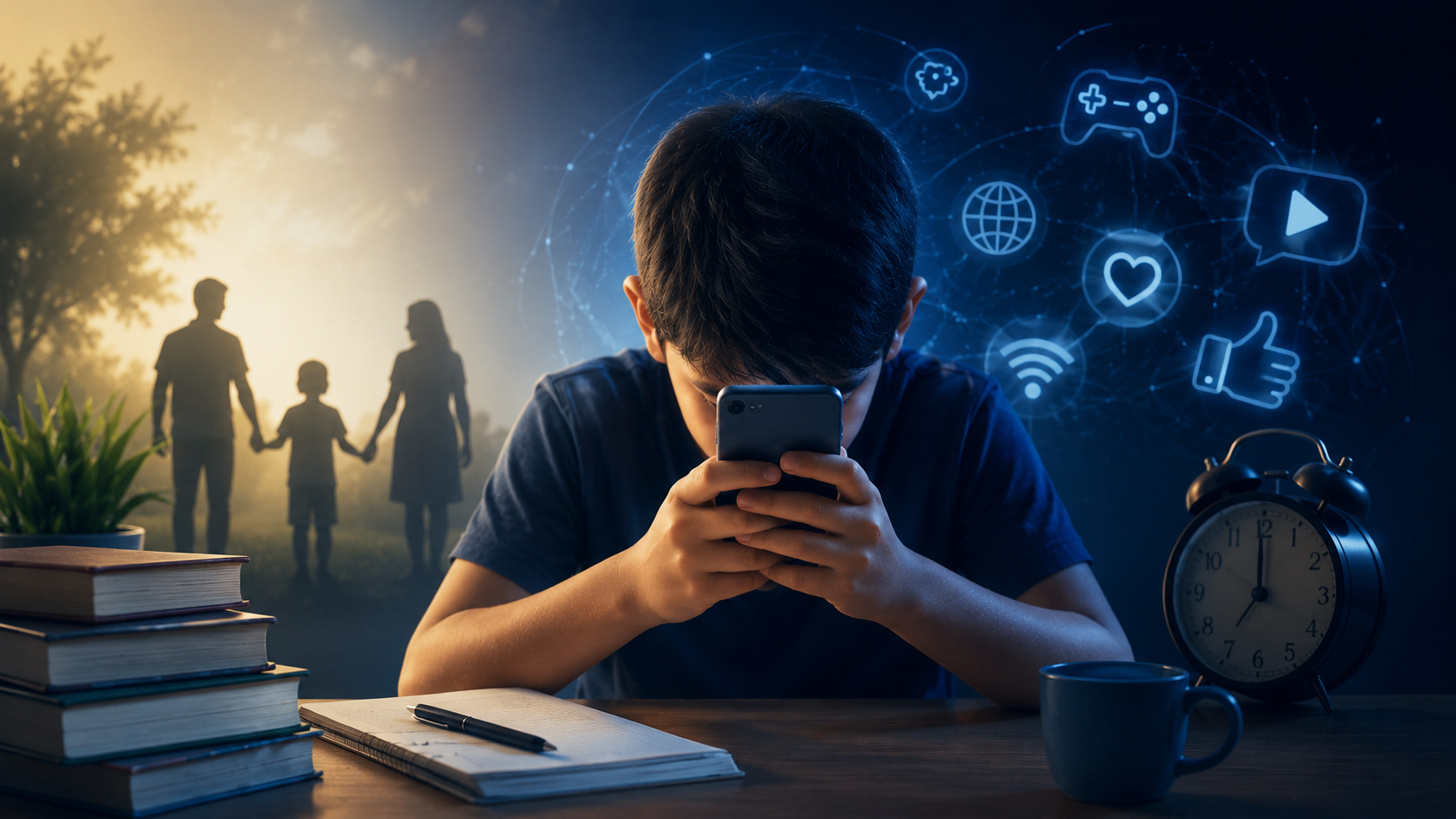
Mobile Phone Addiction: The Silent Epidemic Threatening a Generation
Mohammad Harun-Or-Rashid
Senior Teacher, Geography and Environment
Does your child struggle to concentrate on studies? Are their academic results declining? Do they become irritated when asked to put away the phone and study? Is a smartphone constantly in their hand?
Do they often seem anxious, easily frustrated, unable to sleep well, or complain of eye strain, neck pain, or back pain?
If your answer is "yes" to most of these questions, it's time to pay attention. These may be warning signs of mobile phone or digital device addiction.
Technology Is Our Friend—Addiction Is Not
Smartphones, computers, tablets, and gaming devices have made our lives easier and more connected. However, when we can no longer function comfortably without them, technology stops being a tool and becomes an addiction.
According to mental health experts, two common signs of technology addiction are:
Spending increasingly more time on digital devices every day.
Feeling restless, anxious, or irritable when separated from them.
Like any other addiction, excessive dependence on technology can gradually damage a person's education, health, relationships, and overall quality of life.
A Growing Concern
According to UNICEF, approximately 175,000 children worldwide access the internet for the first time every day.
The situation in Bangladesh is equally alarming. Studies indicate that many students spend 2 to 4 hours daily on smartphones, while a significant number spend 6 to 8 hours or even more.
Unfortunately, much of this screen time is not devoted to learning. Instead, it is consumed by social media, online games, streaming videos, and endless scrolling.
The Post-Pandemic Reality
During the COVID-19 pandemic, smartphones became essential for online learning. Parents had little choice but to place digital devices in their children's hands.
However, what began as an educational necessity has, in many cases, evolved into a daily habit—and eventually into addiction.
Today, many children pick up their phones claiming they need them for studying, only to end up spending hours on Facebook, YouTube, TikTok, or online games.
What Are Our Children Losing?
Not long ago, children's hands were filled with storybooks, comics, science books, and detective novels. Today, those books have largely been replaced by smartphones.
As a result, many children are gradually losing:
Concentration and memory
Creativity and imagination
Patience and self-control
Communication and language skills
Leadership qualities
At the same time, they are becoming more vulnerable to:
Eye strain and neck pain
Sleep disorders
Anxiety and emotional instability
Social isolation
Physical inactivity
What Can We Do?
This is not merely a children's issue—it is a family issue.
The solution must therefore begin at home.
Here are a few practical steps we can take:
Spend more quality time together as a family.
Set healthy daily limits on screen time.
Keep mobile phones away during meals and before bedtime.
Encourage children to read books, play outdoor games, and participate in cultural and creative activities.
Most importantly, parents should model responsible digital habits. Children learn far more from what we do than from what we say.
We must remember a simple principle:
We should use technology—technology should never use us.
Final Thoughts
Many parents often say,
"My child is always glued to a mobile phone."
But before blaming our children, perhaps we should ask ourselves:
How much time do we spend on our own phones every day?
Children imitate our behavior more than they follow our advice.
If we truly want to protect the next generation from digital addiction, the change must begin with us.
Because strong families build healthy habits, and healthy habits build a generation that is creative, responsible, and emotionally resilient.